
Tummy Tuck
Abdominoplasty
- Remove Loose or overhanging skin after pregnancy or weight loss.
- Repairs separated abdominal muscles and flattens tummy bulge.
- Removing persistent skin irritation, rashes or discomfort in skin folds.
- Reduce difficulty wearing fitted clothing.
- Restoring abdominal tone and improving posture.
Why Choose Mr. Tarek Eltantawy
Mr Eltantawy offers a careful, individualised approach to abdominoplasty, combining aesthetic judgement with safety and precision. Every operation is performed in accredited hospitals with consultant anaesthetists and attentive nursing support. Emphasis is placed on realistic planning, gentle tissue handling and meticulous closure for optimal healing and contour.
What is tummy tuck?
Abdominoplasty, commonly known as a tummy tuck, is a surgical procedure that removes excess skin and fat from the abdomen and tightens the underlying muscles to restore a flatter, firmer abdominal contour. It is often performed after pregnancy, significant weight loss, or ageing when the abdominal wall becomes lax and skin loses elasticity. Depending on the degree of excess, the procedure can range from a limited “mini” abdominoplasty to a full or fleur-de-lis abdominoplasty for extensive cases.
The procedure takes approximately 2–4 hours under general anaesthesia.
Most patients stay in hospital one to two nights, depending on recovery and drain management.
Results are seen immediately after swelling reduces, with continued improvement over 3–6 months.
Scars will initially be pink and firm, softening and fading over 12–18 months. The outcome is long-lasting
provided weight remains stable.
What is tummy tuck
Abdominoplasty, commonly known as a tummy tuck, is a surgical procedure that removes excess skin and fat from the abdomen and tightens the underlying muscles to restore a flatter, firmer abdominal contour. It is often performed after pregnancy, significant weight loss, or ageing when the abdominal wall becomes lax and skin loses elasticity. Depending on the degree of excess, the procedure can range from a limited “mini” abdominoplasty to a full or fleur-de-lis abdominoplasty for extensive cases.
The procedure takes approximately 2–4 hours under general anaesthesia.
Most patients stay in hospital one to two nights, depending on recovery and drain management
Results are seen immediately after swelling reduces, with continued improvement over 3–6 months.
Scars will initially be pink and firm, softening and fading over 12–18 months. The outcome is long-lasting
provided weight remains stable.
Before & After
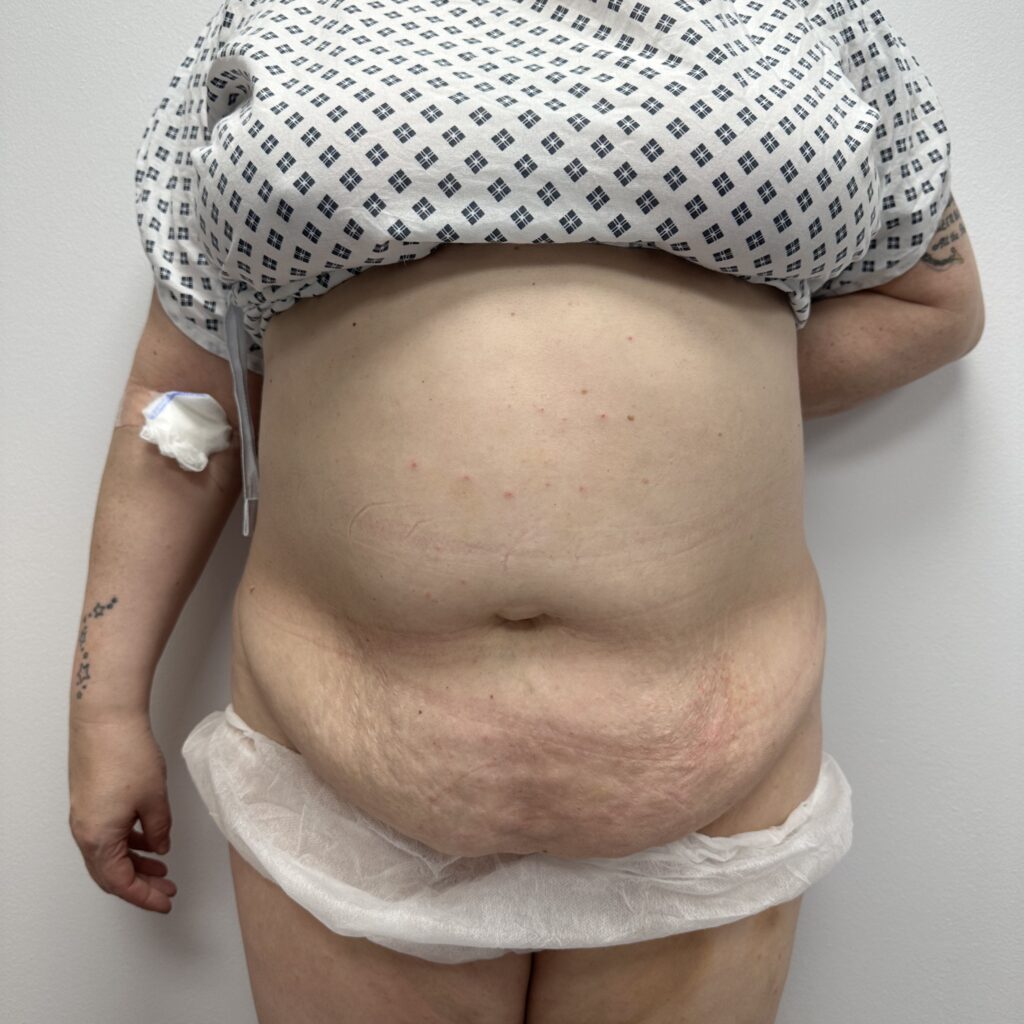
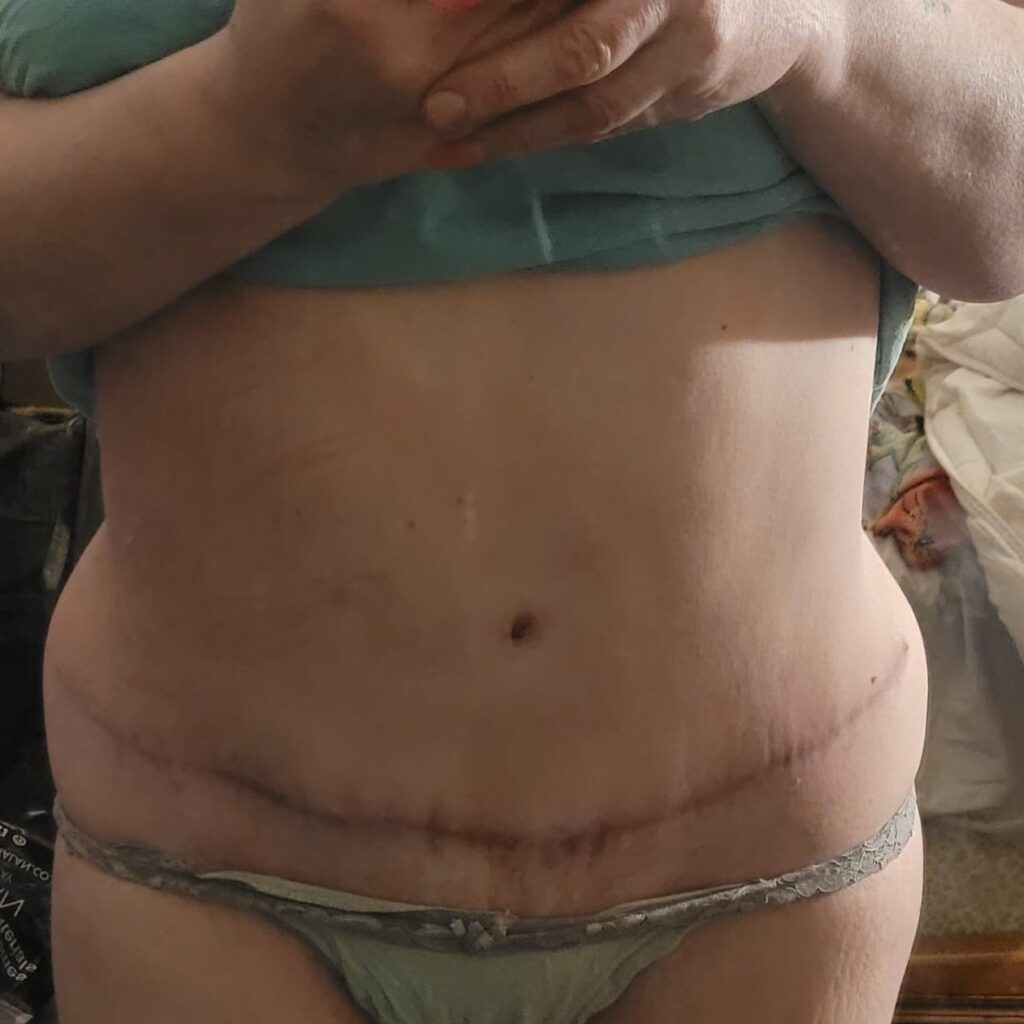
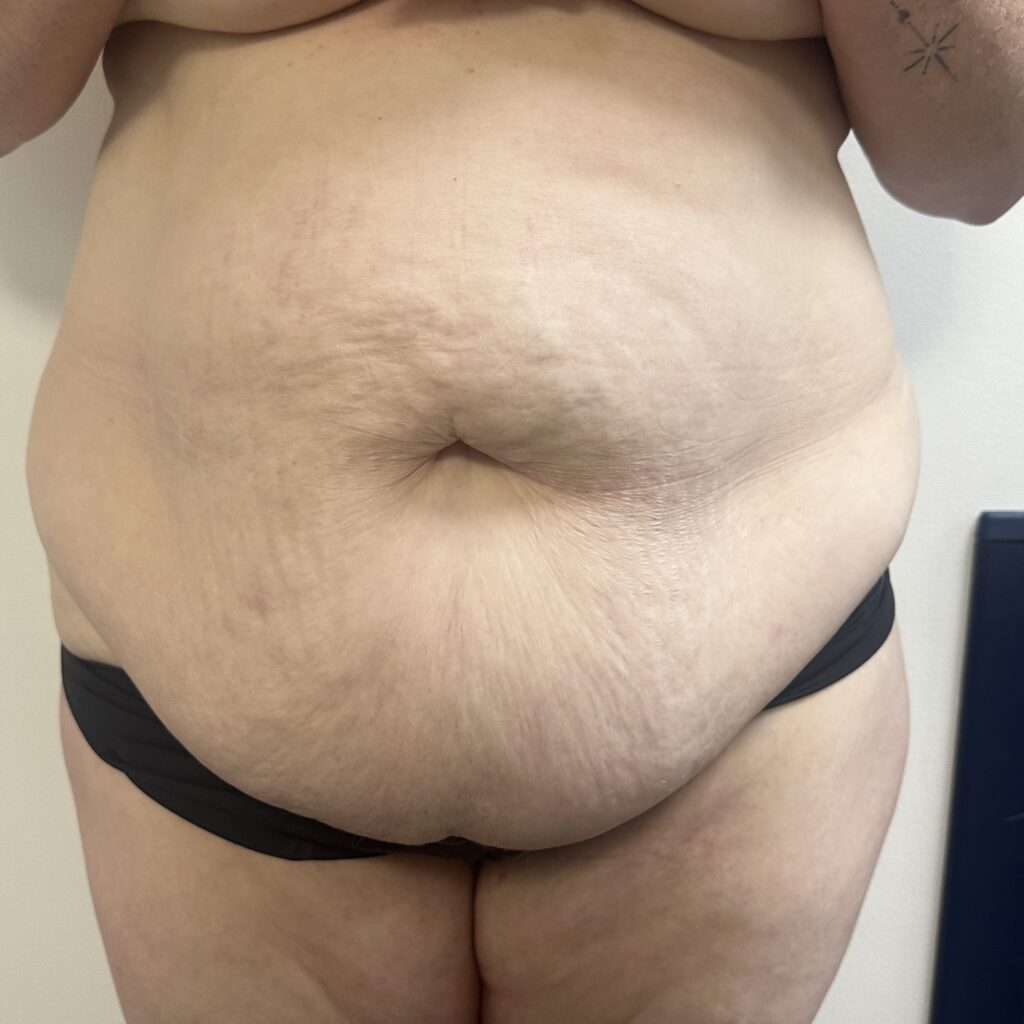
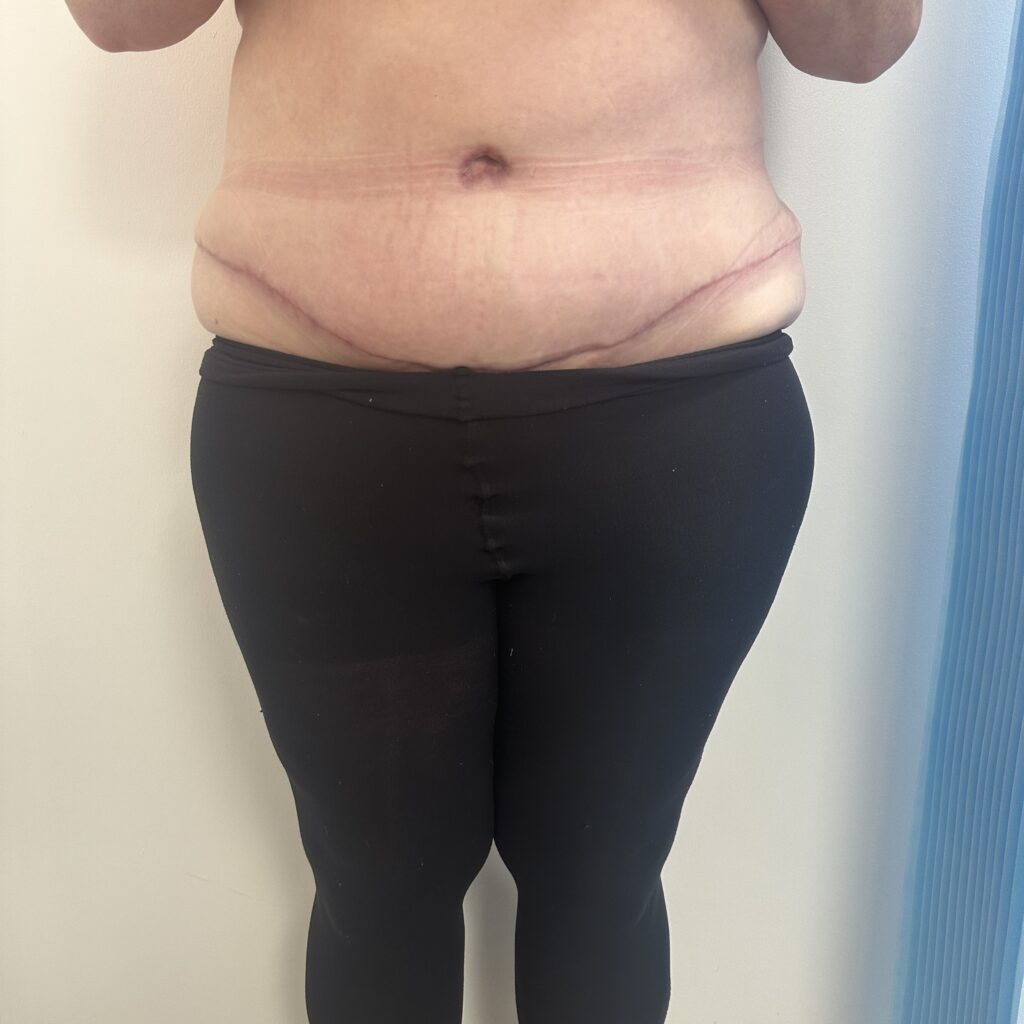
Suitable candidates are those who
Weight
Have reached a stable, healthy weight (ideally BMI below 30).
Smoking
Do not smoke or are willing to stop for at least six weeks before and after surgery.
Family
Completed family planning (future pregnancies can affect results).
Health
In good general health with realistic expectations.
Pre-Operative preparation
Compression garment
Compression garment fitting before admission
Weight stabilisation
avoid dieting or large fluctuations before surgery.
Support
arrange support at home for the first few days postoperatively
Blood tests
Blood tests and ECG may be performed if indicated.
Smoking cessation
minimum of six weeks before and after surgery.
Medication review
minimum of six weeks before and after surgery.
Surgical technique
Abdominoplasty is performed under general anaesthesia.
- A horizontal incision is made low on the abdomen, usually within the bikini line.
- Skin and fat are lifted up to the ribcage to expose the abdominal wall.
- The rectus muscles are tightened if separated.
- Excess skin and fat are removed.
- The umbilicus (belly button) is repositioned through a new opening.
- Drains may be placed temporarily to reduce fluid build-up.
Risks and complications
- Seroma (fluid collection).
- Bleeding or haematoma.
- Infection or delayed wound healing (especially in smokers).
- Poor scarring or asymmetry.
- Numbness of lower abdominal skin (usually temporary).
- DVT or pulmonary embolism (rare, prevented with early mobilisation).
- Need for revision or dog-ear correction
Recovery and aftercare
First 48 hours
• Expect tightness, swelling and discomfort—controlled with pain relief.
• Walk slightly bent at the waist to protect the incision.
• Drains (if used) usually removed after 24–48 hours.
Weeks 2–4
• Most patients return to desk work after 2 weeks.
• Driving can resume once you can move comfortably and wear a seatbelt without pain.
• Light exercise (walking, gentle cycling) after 3–4 weeks.
Weeks 6–12
• Resume normal activities and gym gradually.
• Avoid core or high-impact exercises until cleared by your surgeon.
• Continue scar care and garment use for 6 weeks.
Book Consultation